
Understanding Chronic Pain
When the brain perceives danger to the body, the nervous system's alarm fires. But the brain can perceive danger even in the absence of tissue damage. This creates neuroplastic pain—real pain generated by the brain, not by structural damage.
Though neuroplastic pain is addressed psychologically does not mean it is imaginary. It is the result of learned neural pathways in the brain. But just as pain is learned, it can also be unlearned.
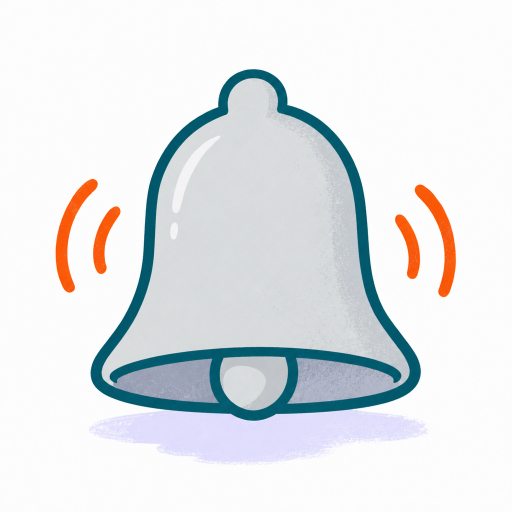
The False Alarm
The brain misinterprets safe or neutral signals as dangerous, triggering pain to protect you.

The Feedback Loop
Fear and anxiety about the pain validate the brain's sense of danger, amplifying the pain signals and creating a vicious cycle.
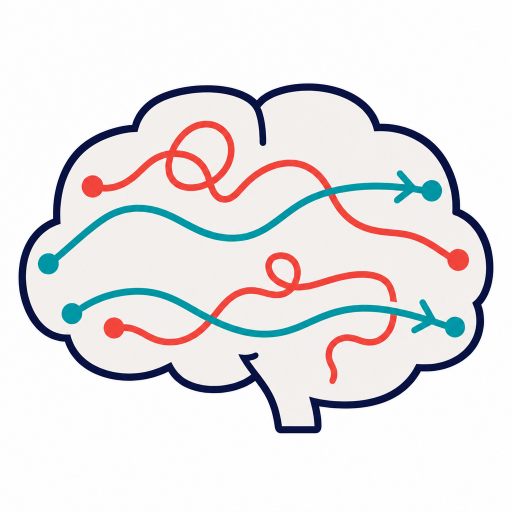
Neuroplasticity
The brain can rewire itself. PRT uses this adaptability to restore a sense of safety and cut off the fuel source of the pain—fear.
SCIENCE-BACKED APPROACH
Rooted in Clinical Research
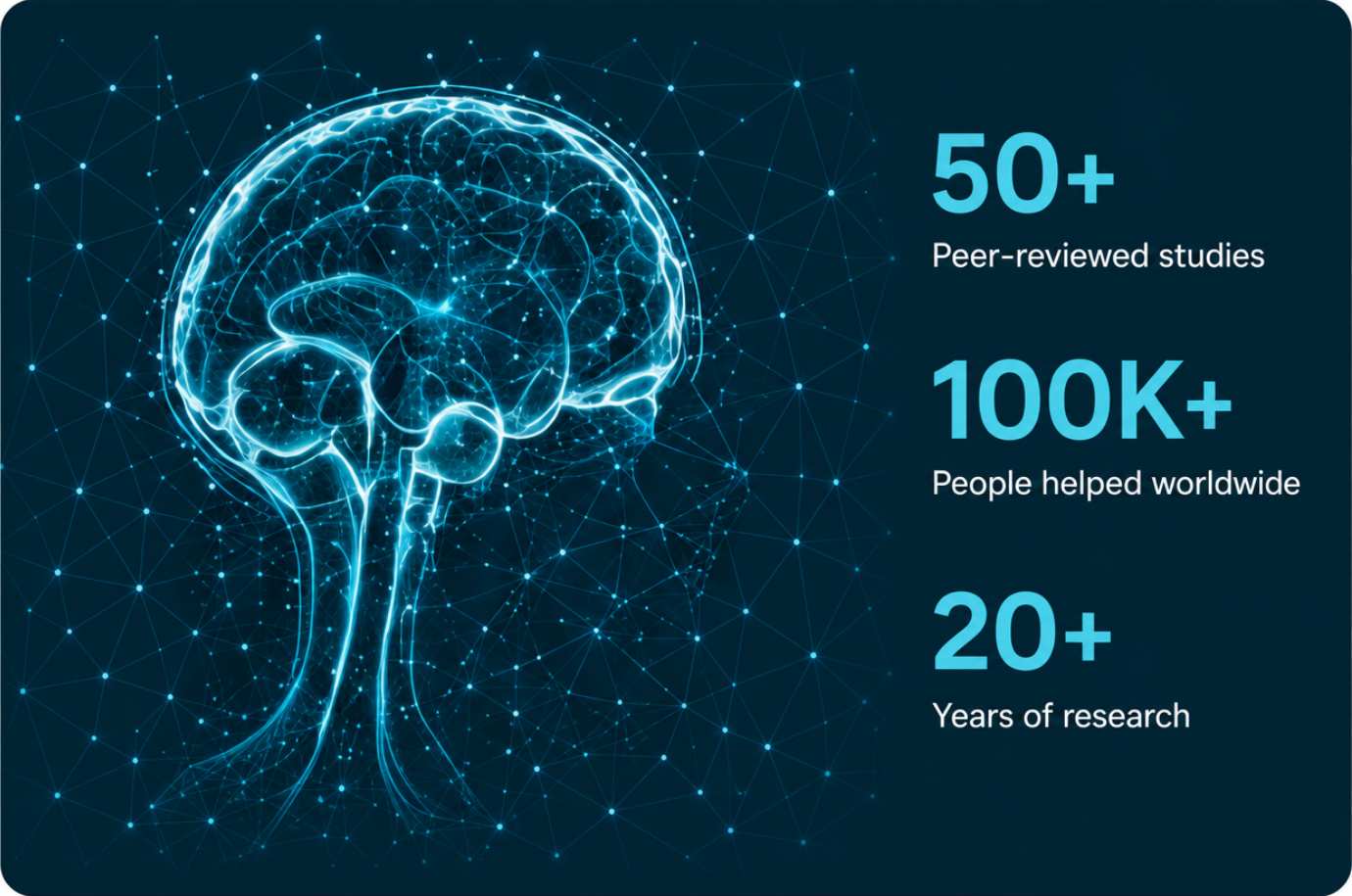
Our approach is built on the latest breakthroughs in
neuroscience. We bridge the gap between peer-reviewed research and applicable recovery practices.
A Deeper Look at PRT
Pain Reprocessing Therapy (PRT) is a system of psychological techniques that retrains the brain to interpret and respond to signals from the body properly, subsequently breaking the cycle of chronic pain. Pain Reprocessing Therapy has five main components: 1) education about the brain origins and reversibility of pain, 2) gathering and reinforcing personalized evidence for the brain origins and reversibility of pain, 3) attending to and appraising pain sensations through a lens of safety, 4) addressing other emotional threats, and 5) gravitating to positive feelings and sensations. See the treatment outline for Pain Reprocessing Therapy here and the group protocol outline here.
A randomized controlled trial at the University of Colorado Boulder validated Pain Reprocessing Therapy as the most effective current treatment for chronic pain. In the study, there were 150 chronic back pain patients. 50 patients received PRT twice weekly for four weeks, 50 patients received treatment as usual, and 50 patients received an open-label placebo injection. In the PRT group, 98% of patients improved and 66% were pain-free or nearly pain-free at the end of treatment. These outcomes were largely maintained at a five-year follow-up.
A secondary analysis of the trial demonstrates that PRT significantly reduces pain intensity and fear avoidance behaviors by increasing mind or brain-related causes of pain. Results suggest that using simple language to reattribute pain from the body to the brain may support effective treatment to relieve pain.
A randomized controlled trial at the University of Colorado Boulder validated Pain Reprocessing Therapy as the most effective current treatment for chronic pain. In the study, there were 150 chronic back pain patients. 50 patients received PRT twice weekly for four weeks, 50 patients received treatment as usual, and 50 patients received an open-label placebo injection. In the PRT group, 98% of patients improved and 66% were pain-free or nearly pain-free at the end of treatment. These outcomes were largely maintained at a five-year follow-up.
A secondary analysis of the trial demonstrates that PRT significantly reduces pain intensity and fear avoidance behaviors by increasing mind or brain-related causes of pain. Results suggest that using simple language to reattribute pain from the body to the brain may support effective treatment to relieve pain.
Write your awesome label here.
Frequently asked questions
How does Pain Reprocessing Therapy work?
PRT teaches patients to recognize that their pain, while real, is often caused by the brain’s misinterpretation of safe messages from the body or an overreaction to harmless signals. Techniques like somatic tracking, mindfulness, and emotional processing help rewire the brain to break the pain-fear cycle and reduce sensitivity to pain over time.
Can PRT still benefit me if my pain is caused by a physical issue or disease?
PRT effectively treats neuroplastic pain and can address the emotional and neurological amplification of symptoms in “mixed pain” conditions (e.g., MS, cancer, or arthritis combined with stress-related pain). While it won’t eliminate structural pain, it can significantly reduce the added layer of suffering caused by fear, anxiety, and body preoccupation.
PRT concepts benefit everyone, and there is no harm or risk in incorporating a mind-body perspective, so long as you still engage in the medical interventions necessary given your circumstances.
Does Pain Reprocessing Therapy work for chronic physiological symptoms besides for pain?
PRT treats persistent pain and other chronic symptoms, including back and neck pain, shoulder pain, hip pain, knee pain, plantar fasciitis, repetitive strain injury, fibromyalgia, tension headaches and migraines, neuropathy, osteoarthritis, irritable bowel syndrome (IBS), tinnitus, fatigue, insomnia, itchiness, nausea, dizziness, vertigo, multiple chemical sensitivity, and much more.
I’m interested in receiving Pain Reprocessing Therapy treatment. Where do I begin?
We are excited for you to embark on a new evidence-based path to recovery. We offer virtual, psychoeducational workshops to learn why chronic pain develops and how to rewire your brain using pain reprocessing techniques. You will learn from expert pain coaches in a supportive group environment. Learn more and register here.
If you prefer one-on-one treatment, you can be matched with an individual provider at our private practice, WellBody Psychotherapy. Complete an initial intake form here, and a provider will reach out to you within 48 hours.
You can also visit our Directory of PRT Providers to find a suitable practitioner. Find local practitioners by searching within your state. Fortunately, if you cannot find a practitioner near you, many will also offer telehealth to non-local clients. The directory lists four professional associations. Medical Providers, such as doctors and nurses; Mental Health Clinicians and psychotherapists; Health Coaches, meaning health, life, or pain coaches; and Manual Therapists, including PTs, OTs, chiropractors, and others.
If you prefer one-on-one treatment, you can be matched with an individual provider at our private practice, WellBody Psychotherapy. Complete an initial intake form here, and a provider will reach out to you within 48 hours.
You can also visit our Directory of PRT Providers to find a suitable practitioner. Find local practitioners by searching within your state. Fortunately, if you cannot find a practitioner near you, many will also offer telehealth to non-local clients. The directory lists four professional associations. Medical Providers, such as doctors and nurses; Mental Health Clinicians and psychotherapists; Health Coaches, meaning health, life, or pain coaches; and Manual Therapists, including PTs, OTs, chiropractors, and others.

Join Our Community
Subscribe to weekly newsletters and notifications of training opportunities, patient workshops, free resources, and the latest news in Pain Reprocessing Therapy.
Thank you!

© 2026 Pain Reprocessing Therapy Center LLC. All Rights Reserved.
Privacy | Disclaimer | Terms of Service | Trademark Use Policy